




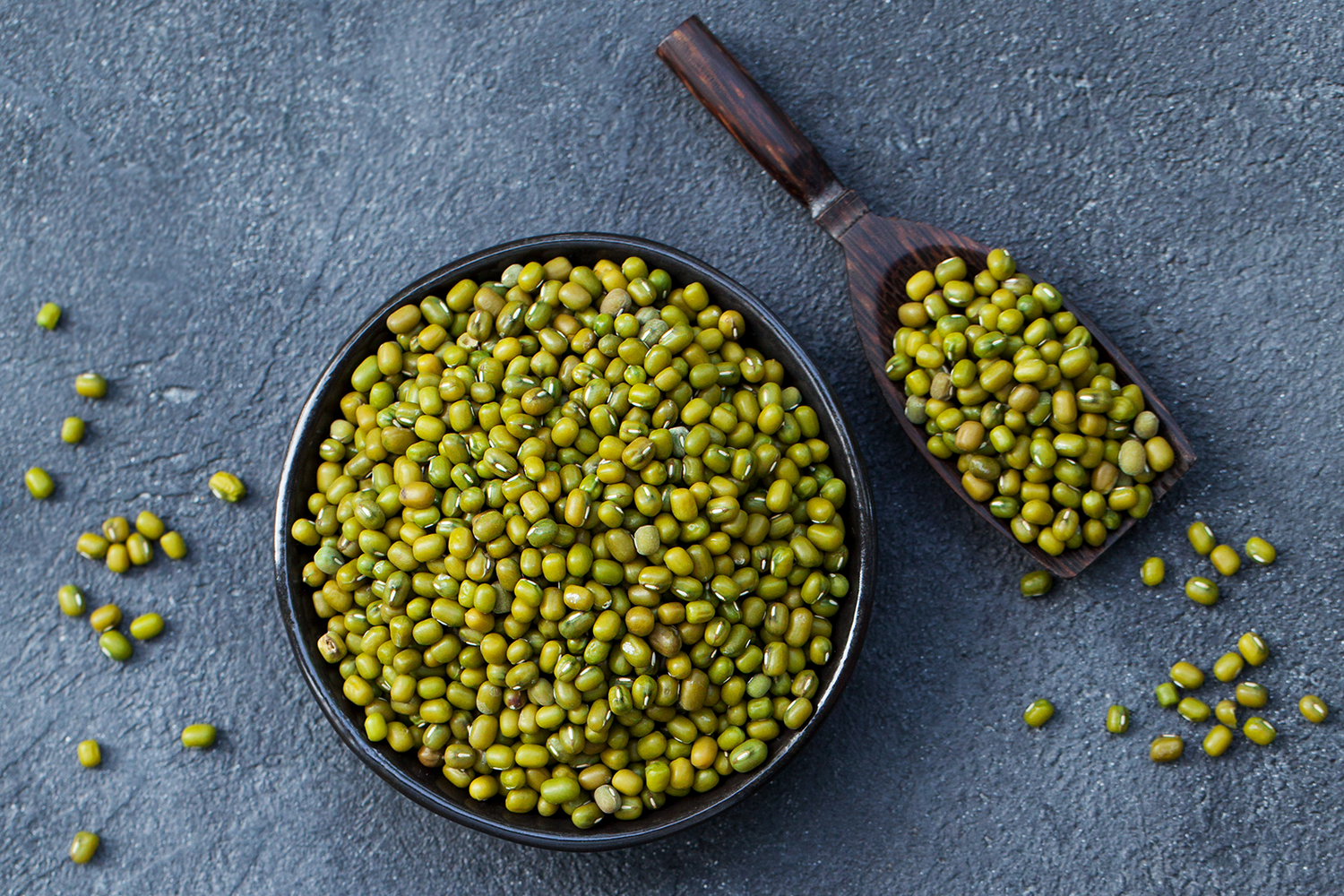
The Benefits of Mung Beans: A Practical Guide
Mung beans — moong, green gram, Vigna radiata — have fed the Indian subcontinent for more than four thousand years. They were never marketed as a superfood. They were simply what people ate when they needed to be nourished, and what they were given when they were unwell. Modern nutritional analysis has since caught up with what the kitchen already knew.
A Nutrition Profile That's Hard to Beat
Dry mung beans run roughly 23–24% protein by weight, which places them at the higher end of the legume range. They're also high in dietary fibre, both soluble and insoluble. They carry meaningful quantities of folate, magnesium, potassium, iron, manganese and B vitamins. They contain almost no fat and no cholesterol whatsoever.
What makes this profile unusual isn't any single number — plenty of foods are high in one thing. It's the combination. Protein, fibre, minerals and a low glycaemic load in the same food is a rare arrangement, and it's why mung beans function as a genuine staple rather than a supplement.
Protein Without the Heaviness
Mung bean protein is rich in lysine, the amino acid most commonly limiting in cereal grains. This is precisely why the traditional pairing of mung beans with rice — khichari — works so well nutritionally: the rice supplies what the bean lacks, the bean supplies what the rice lacks, and together they form a complete amino acid profile.
The practical difference people notice is in how it sits. A high-protein meal built on animal protein tends to be heavy and slow to digest. Mung beans deliver comparable protein without that weight, which is why they've traditionally been the food given to people recovering from illness, and why they suit anyone who needs to eat and then immediately think, train or travel.
Fibre Your Gut Bacteria Actually Use
Mung beans are a strong source of dietary fibre, including resistant starch and soluble fibre that reach the large intestine largely intact. There, they act as substrate for your gut microbiota — the bacterial population that ferments them into short-chain fatty acids, the preferred fuel of the cells lining your colon.
This is the mechanism behind the phrase "gut health", stripped of the marketing. You are not just feeding yourself. You are feeding an ecosystem, and what you feed it determines what grows. Fibre-rich whole legumes are among the most reliable things you can give it.
Steady Energy Instead of a Spike
Mung beans have a low glycaemic index. The combination of protein, fibre and slowly-digested starch means glucose enters the bloodstream gradually rather than in a surge. You get sustained energy rather than the rise-and-collapse pattern of refined carbohydrates.
For anyone managing energy across a long day — or trying to get through the mid-afternoon without reaching for sugar or a fourth coffee — this matters more than the headline protein number. It's also why mung beans feature in dietary approaches for blood sugar management, though anyone with diabetes should talk to their own healthcare provider about their specific diet.
Folate, Magnesium and Potassium
A cup of cooked mung beans supplies a substantial share of your daily folate — a nutrient central to cell division and red blood cell formation, and one that's particularly important in pregnancy. They're also a solid source of magnesium, involved in hundreds of enzymatic processes including muscle and nerve function, and potassium, which works against sodium in regulating fluid balance.
These are unglamorous nutrients. They don't get their own aisle in the health shop. They're also the ones most commonly under-supplied in modern diets built around refined foods.
The Ayurvedic View
In Ayurveda, mung is considered tridoshic — suitable for all three constitutional types, which very few foods are. It's classified as cooling and light, easy to digest, and is the traditional foundation of kitchari, the dish used for cleansing and for feeding the convalescent. It is, in the Ayurvedic framework, the food you return to when the system needs settling.
We don't ask anyone to accept Ayurveda as a scientific framework. But it's worth noticing that a four-thousand-year-old tradition and a modern nutritional analysis independently arrived at the same conclusion about the same bean.
Good For You, Good For the Soil
Mung beans are nitrogen-fixing legumes. They pull nitrogen from the air and return it to the soil, reducing the need for synthetic fertiliser and leaving the ground in better condition than they found it. They need substantially less water than most protein crops and grow across a wide range of climates without heavy intervention.
Very few foods are simultaneously among the best things you can eat and among the best things you can grow. Read more about mung beans and the environment →